FOLLOWERS - BLOG BUDDIES!

Showing posts with label Preppers - Prepping for Emergencies. Show all posts

Friday, October 24, 2014

# 532 - Ebola, ISIS, Rioting Idiots...Prepping Reconsideration

Prepping was a way of life for many people for a long time.


My great-grandmother was the first "prepper" I had ever met. She
understood old-fashioned preservation techniques, she canned
regularly and raised chickens for her own food.

Actually, this is nothing new since many of us grew up with family members who "prepped" for the year with canned home-grown vegetables and fruit jams as well as those who hunted for sustenance.


These days, prepping has become a conscious effort to use the "preparation" for future needs that might result from something gone wrong in society.

We have all seen the ideas for prepping stem from concern about solar flares, satellite destruction, economic collapse and so on. However, I developed an URGE to begin some minor prepping after living through Hurricane Ike destroying our house and our neighborhood, encountering looters in our own neighborhood, and being in a mandatory evacuation zone that resulted in police barricades blockading the entrances/exits to our neighborhood for an extended period of time.


Several of us "hunkered down" for numerous reasons. We were a family that choose to stay behind. If we hadn't made that decision, we would have certainly lost EVERYTHING in our house to the continual rains that came through the roof that had been blown away between the hurricane and a twister. Then, had we not been there, the people looting houses in the neighborhoods would probably have hit our house as well.


Yes, we took a chance, but after living along the Gulf Coast region our entire lives, we were not accustomed to be runners...and the one year we did abide by Houston's idea to flee, we were stuck in devastating road conditions for nearly 13 hours that caused more loss of life than the storm itself caused. Never again.


In dire circumstances, independent judgment calls must be made. We learned, the hard way, that the government might be well-meaning, but they are not always right. With a high level of preparation and determination, a person or family can make their choices and live by them.

During the storm that Houston saw complete government failure during evacuation, we saw lawlessness in droves...we literally lived through life and death situations while being trapped on the road. Of course, me and my two daughters were EACH carrying guns, such as a Glock, we were ready to confront any criminal element that wanted to rob us, especially since we were towing a 30 foot RV that looked enticing to people who did NOT prepare for disaster along the road.

Houston's standstill roads during evacuations gone wrong.

People were traveling with pets and the Texas heat made untold numbers of people's vehicles overheat, so people were finding their pets dying. The only solution at this time, for many people, was to leave their pet's body along the roadside. My girls and I witnessed a man being hit on the head with a crowbar and with his skull cracked, with blood running down his face, he walked in circles in a parking lot, not knowing who he was or what had happened...we could not get one officer to come help because they would have faced insurmountable odds with stranded, furious, unprepared, desperate people. This is when you are thankful that you know a little about "prepping."

STAY OUT OF SIGHT.

During the time we are stranded, my daughters were not even allowed to hold a water bottle above the truck window line. The RV door remained locked and we made trips to the RV trailing the truck only during a dire emergency, with a gun in hand. One thing is for sure, we did not want to become a rolling "outhouse" for all those around us who felt entitled to use our RV for their personal use. Sorry, but that is not an option.


Truly, during moments like these, you MUST think of you and your family. I could have embraced a generous spirit and began to hand out water bottles, but I also understood that I had two teenage daughters who would need clean water over the next few days...which the water ran out fast. After a trip that normally would take two hours ended up taking over ten hours because of the panic and ill-planned city evacuation, I would be extremely thankful that my "prepping" instincts helped me protect my daughters. We had enough water left for us to not become dehydrated. Water...it definitely runs out faster than anyone can imagine.

As for today's preparations...I am thankful, our land has a Spring-Fed lake that could be a source of water for us, in an emergency.


Over the past year I have taken my prepping efforts up a notch. Of course, we have a flock of chickens that provide plenty of eggs that could be used to provide nutrition, but I have also begun to store extra amounts of rice, tuna fish, pasta, matches, seeds, packets of Ramon noodles for the carbs and sodium, popcorn, dry beans and so on. I even purchased buckets with lids from Walmart, and I really don't know how to protect the dry food other than to keep it in a cool, dry environment, and I lined the bucket with a black, thick trash bag to make sure no extra light would get inside the bucket.


And now that the news is picking up momentum with revealing the issues our society is now facing, such as domestic terrorism from foreigners and from people living in America who feel their discontent gives them a right to destroy communities...I feel it is important to be prepared to "hunker down" in a different way.


After being in a situation that was so dangerous, for many days with my girls, it became apparent that the local authorities would not be able to respond to most emergencies due to the calls being far higher in numbers than can be confronted. We need to be able to fend for ourselves.


If we were not able to go into town to get groceries because of local unrest, we need to be accountable for our own residential and personal protection, meaning we need to be well-armed, well-trained and with ample ammo at our disposal, as well as prepping with extra food on hand to last several weeks, at a minimum.


Then, we have illness and potential bio-hazards, such as Ebola that could become a serious concern for our communities. Just as Hurricane Ike prevented the trucking industry from coming into our communities for the replenishing of desperately needed fuel, groceries and such...the community basically just shut down.


Everything closed...there was no business to be had, especially since there was not electricity to run the fuel pumps and registers and lights. Everything shut down, and it took weeks to restock and to resupply. If you needed gas, too bad. If you needed water, too bad. If you needed batteries, too bad. If you were hungry...oh well...nothing within a two-hour radius is open to help you!


With Ebola, there will be additional problems for any community that is stricken with a major outbreak because no one will be eager to rush into the area to truck in goods. Also, if a major outbreak occurs in a community, we will see a lack of people wanting to go to work, so this will also contribute to areas being forced to shut down. Growing your own food would really be a great way to be self-sufficient.


And the police cannot protect a community from certain hazards; the government cannot protect a community from certain dangers; personal responsibility must be embraced. Police and government services are a great "back-up," but I know that we are often our own first line of defense for many different situations.

Regardless, I appreciate and have high regard for those who put themselves on the line for our safety and for our rescue from those who are self-serving on a criminal level.

Looters without a Cause - Ferguson

If we were to suddenly be in an area where such a virus began to spread, rapidly, we would need to be ready to either leave the area for an extended period of time, or since we live on acreage, we would need to be ready to "hunker down" on our property and to not leave for however long it takes to have confidence that our community is in the all-clear. For a virus such as Ebola, we can all see how this could present a problem due to the extended incubation period of 21-days for those who are exposed to the virus.

This also means that people with chronic medical conditions truly need to have extra medications on hand and to have a First-Aid kit that is extensive.

Since things are becoming iffy with our federal government lacking guts and since this administration lacks an aggressive proactive stance necessary to protect the citizens of our nation, we need to be prepared for the worst and expect the best.

I do feel better, overall, that we are living out of the city and deep in the forest. I suppose that we would have to watch for looters desperate for provisions, just as we had to do when our neighborhood was hit by the hurricane.

Ferguson-Fit-Throwers, any excuse to steal something and feel justified!

Since we do have surveillance on the land and we have set up certain protections, we are better off than most, but I think that we all should be alert and prepared rather than afraid and unprepared.


Having a plan is better than being taken off guard. Does anyone else have a plan to protect themselves and their family from a community issue that could require individual pro-activity?

Saturday, January 19, 2013

# 391 - Boy Scout Weekend Prepping

Today my brother came over to pick up the lawn tractor and trailer to go to our acreage for mowing in preparation of the Boy Scouts Wilderness Survival Badge weekend, which is next weekend.


This weekend, he'll be mowing the parking and camping sites, then doing some preparations for the boys to better handle their wilderness experience. This weekend, he'll probably use the chainsaw to cut down a few pine trees and such that the boys will be better able to use to build their makeshift shelters and the rudimentary bridge across the creek. I believe the branches with the evergreen pine needles will make great coverage for their shelter roof. I can't wait to see the pictures my brother will be taking next weekend!

One thing for sure, in my family, I'm surrounded by men who are typical products of testosterone over-drive maleness. Sometimes I am ready to go bonkers about that fact, but then I look at these men and am proud at how they get things done. It's nice to see them work together and able to communicate like REGULAR people!


For me, I was looking at my little bearded brother today and still can't believe he's now 40 years old! It's great that he's so active with the Scouts. He's a hard worker, an intelligent man, and he is always involved with the kids on the weekends. Since he's an outdoorsman, this usually involves being in the great outdoors. But, most Sundays they are in church. He keeps his priorities in line.


He also took a chainsaw and I'm sure that will add to his fun times on the land. There seems to be a little Lumberjack in most men. Put a chainsaw in their hands and they are saw-happy. I think men believe the smell of sawdust is an exotic aphrodisiac.

Maybe there should be a perfume for women, Eau De Sawdust Parfum, or whatever the terminology would be with a French spin to it. Then, added scents to this special line of perfume would be...bacon, ocean breeze, and perhaps, motor oil. \

Hmmmm...

Monday, January 14, 2013

# 389 - Wilderness Survival Training

I am so proud of my brother. Since I'm from the South, I call him, "Bubba." However, his actual name is Douglas. He is a Boy Scout Leader for Troop 202.

Because my brother is a true survivalist and a decorated war veteran, he will be leading the troop into the wilderness for survival training. The kids who pass all the tests for the weekend will earn their Wilderness Survival Badge.

Douglas and his youngest son, Quin.
Guess where he's taking the troop for their survival training?

He's taking the scouts to my acreage that's located in the Piney Woods of the Big Thicket region. There's near ten acres waiting for the scouts and they will definitely be tucked away inside the forest.


The troop got together and my brother put it to the kids like this, of course, he's giving this speech in his typical booming "Marine" voice, (I'm paraphrasing from my conversation with him), he told the troop, "At the end of this month, I will be taking you scouts into the wilderness where we will live out a survival scenario for the weekend. Your leaders will be injured and the bridge to the creek, needed to escape, will be washed out, so you will have to build a natural bridge to cross the water. Each of you will need to build your own make-shift shelter, prepare your own drinking water, build your own fire, and provide First Aid to your leaders."

My nephew is the long-legged boy to the far right.

He had their attention, he continued, "When you are in the wilderness, you might come across predatory animals, bad weather, unfair conditions, discomfort, and you might want to cry, whine or moan. But, if you walk up to a tree and cry and wail to the tree...What Will Happen? The tree will not respond, AND in this manner, your scout leaders will be trees. We will NOT respond to crying or whining or complaining because this is a weekend for survivalists and that means YOU must work out your own problems. By the way, remember that your leaders will be 'injured' so you will need to take care of US leaders in addition to taking care of yourself. It's going to be tough. You will be challenged and if you succeed, you will definitely have EARNED your Wilderness Survival Badge."

Since my brother is a Marine (never say "ex" Marine), he is forceful and competent, can kill with his bare hands and all that good Marine stuff.

The handsome guy standing there in the middle of the Middle East,
that's my brother. An amazing person --- it took him a while to
figure it out, but he is indeed amazing.


Did I mention that he's also a Systems Analyst Executive in Houston, Texas? The Survivalist-Marine-Computer-Geek.


But, this is still his favorite past-time...


There is an area of our land where the boys will be camping out. My brother has made a couple of trips to scout it out to pick out the perfect spot. I wish I could climb a tree and get a bird's-eye view of the scouts on Saturday, especially as my brother is writhing on the ground with his fake injury...he's a pretty good actor. Come to think of it, aren't all little brothers great at fake-hurt acting? Even if they must slam their own arm in the door kind of acting, twist their own arm kind of acting, then run to mother with real tears while pointing to the big sister and saying, "She hurt me; I don't know why! I was being so nice!" Yea, acting, something like that. He's good, I've witnessed it plenty of times, personally. Let's hope my brother is now smart enough to create a fake injury instead of slamming his face into a tree for the sake of realism. I may need to have a discussion with him about the benefits of FAKE blood. haha.

As for the land, it's pretty isolated enough to believe they are really trapped in the wilderness, but they'll have access to a lake with spring-fed water and a creek. But, the water will still need to be treated before it can be drank. In a worse case scenario, they actually could walk about two miles to the corner store. However, the truth is...where our land is located, if the kids didn't know where they were going, it is a real possibility that they could become lost deep in the woods, very easily, and it could be serious. The Texas Forestry Department doesn't have a head-quarter's building around the corner from our land for nothing.

But, that's what this Wilderness Survival Badge is all about. If those kids were to ever become lost in the wilderness, they will know how to increase their chances of surviving. And guess what? America is still FULL of areas of wilderness; this is a good skill to learn. America also suffers from natural disasters that would make survival training truly valuable.

The Scouts will be allowed to cut down certain pine trees to build their independent make-shift shelters and to create a passable area at the creek. I believe they will use the pine branches to make the roof of their shelters which my brother said should be very low to the ground, just enough for the kids to slide under because it will better hold in their body heat with less space to the "ceiling" of the shelter.

I think that starting a fire will be their main challenge. Each scout must start his own fire. That will be interesting. I can't wait to hear the details of how this goes.

My brother's three awesome kiddos!

My brother is a sweetheart to me. Like any siblings, we have our ups and downs, but our hearts are very close. He is my "little" brother, but I am so damn proud of him. He's become a man of great conviction, truth and honor. He took a rough road to get there, but he got there and he keeps trying to reach higher.

At Heather's wedding a few months ago, my oldest daughter's wedding, my sweetest dance was with my brother. We couldn't even talk...just the knowledge that we were kids together and that our own children are growing up was overwhelming. All we needed was a couple of minutes together to absorb the phase we've reached as siblings.


It took a long time to get to that wedding day for my daughter, all the way from days like these...


...and these...but I think he's off the bottle now.


As soon as the scouts have their weekend with Big Foot on our land, I will be posting pictures to share with you. I'm sure Bubba will have incredible memories to share and the boy scouts will have awesome memories as well. I can only imagine how he will play out the scout leaders' injuries and what will be expected of his troop. These boys will definitely benefit from my brother's life experiences and from being thrust in the middle of the woods and expected to "survive."

It's nice to know my brother was selected to lead the troop for this badge expedition, especially since my brother is a man who survived in the desert; he's survived in canyon-lands: and he is a true woodsman from babyhood to manhood. To be honest, all this upcoming fun makes me wish I had been in the Boy Scouts, well, that sounds WRONG on many levels. Yes, I believe ONLY BOYS should be in the Boy Scouts, but they sure get to do a lot of awesome things! Forget the cookies! Give me the woods!

Good thing is, the first night there, Friday night, they will be staying in a tent, then the survivor time begins the next morning and will continue all throughout that coming night, all night, and I suppose it will come to an end on Sunday morning. For these boys, I bet Saturday will be high-stress, challenging and a test of their skills while Saturday night will seem to last forever.

I'm going to tell my brother that they can pick a hardwood tree (out of the hundreds on the land) and carve in their troop number and date, a tree that will be there for a long time for all to see. I'm sure those boys will leave their "mark" on our land in many ways, especially in sporadic holes dug here and there for a specific purpose, but the carved tree will give me years of joy as I pass it by.

By the end of January, the Boy Scouts will be one step closer to becoming a man. They might go home with their chests sticking out a bit further and with the feeling that chin hairs are starting to sprout, but I bet most will be glad to be home with mommy, a warm bed, and a kitchen with food to grab. Life will certainly look more grand and their pride will be inflated in a positive way. Ahhh, the beauty of the Boy Scouts organization.

Thursday, November 1, 2012

# 367 - Storm Aftermath Memories and Sandy's Fallout

Living through the aftermath of a devastating hurricane and all that it whips around with its destruction is not something that can be conveyed through words or pictures, not completely.

For 39 years of my life, I've lived in the Bay Area of Greater Houston. Hurricanes have come our way. The last for our area, Hurricane Ike, destroyed our home. We were in a mandatory evacuation zone, but several of us stayed for multiple reasons...the first being a tidal surge was most feared. The conjecture for the height of the hurricane induced tidal waters had been a major point for us because our street is one of the highest elevations in the area. From the weather station's reports, we knew that our street would be high up enough to escape a tidal surge, by a few feet.

Another reason for staying is that we had tried to flee during the last major hurricane evacuation and found ourselves trapped on the road, in the Texas heat, in extremely dangerous circumstances and with no gas stations open along the route to refuel. Resources were completely depleted. People did not anticipate having to sit in their vehicles for 10 hours straight, under the blaring Texas sun. Most people didn't even have enough water for such an unexpected "trip."

Essentially, for two days, people were trapped on the roads leading out of Greater Houston. It didn't help that officials had shut off all the back-roads that would have certainly alleviated road congestion for a city as massive as Houston. People DIED because of evacuation disasters. It made a lot of people realize that the hurricane itself did not cause deaths, but the evacuation crisis caused many deaths. Initially, people on the road were so hot in their non-moving vehicles that they sat and let the vehicles run so they could at least have air-conditioning. Eventually, many people had vehicles that over-heated and had to be pushed aside after they were given enough room to move the car a few feet because the traffic had finally inched up a tad within a five hour period. Tempers flared. Groups of people walked around, weaving in and out of the cars, as if to see if there were any supplies for the taking.

During horrible evacuation gone wrong, I had been behind the wheel with my two daughters. The three of us together, on the road for hours, while hauling a 30-foot RV...my first time to ever drive while pulling an RV. Of course, the three of us were fully armed. Even teeny-tiny Stefie had her 9 mm weapon at the ready. Most people on the road were having to relieve themselves --- without much privacy. At least we had an RV behind us that we would make very limited runs to, when desperate. People's pets were dying from heat exhaustion and they were having to dump their bodies alongside the road. I cannot express the trauma of the situation and the terrifying circumstances that this evacuation had introduced to us girls. I clearly remember being ready to defend ourselves and realizing that our main concern would be to not make an innocent victim out of a bystander, so many, all around us. And I thought the kid in the RV behind us, being arrogant about eating his Popsicle was a prime target for the desperation that surrounded their vehicle. Those parents certainly weren't displaying much intelligence in that moment when many people were dehydrated and feeling beyond panicked. So, the evacuation option was also not an easy decision, especially since we did not trust city officials to handle it any better this time around.

Also, we know that hurricanes move inland and carry themselves up into the state while bringing high winds that can devastate a city that is hours away from the coastline and point of land-impact. High winds are a certain danger. Those of us who are accustomed to severe coastal storms do understand the dangers of high winds. Not something to mess around with.

So, when Hurricane Ike rolled around, we and a few other people in the neighborhood decided to stay. Right or wrong, the decision to "hunker down" had been ours to make and I do not regret it, although the challenges it brought were downright scary. Regarding our decision to stay, we were ancy, for many reasons. Turns out, one of the ironic stories for our block had been our neighbors who had fled the hurricane and found a cozy hotel a few hours away. They talked about how they felt greatly relieved to be at a "safe" distance from the chaos. However, the hurricane moved across land and brought with it a fury that still found them as a tree fell onto their second floor hotel room and caused the ceiling to collapse. They were very fortunate to not have been injured. The hotel was in ruins, but crammed many of the temporary residents into a safe portion of the hotel on the bottom floor, but no one slept very well. They came back to find their house rather intact...a few shingles missing, a leak here and there, but nothing compared to the trauma of them fleeing. The most odd part of this happening is that their belongings that had been taken to the hotel were mostly ruined, while the belongings left at the house in the mandatory evacuation zone were mostly not damaged.

However, we had other friends who stayed and found themselves in a bid for life as their homes were swept off their foundations and washed out to sea. Fortunately, they could see the incoming waters rush in toward their house and they made a get-away in the nick of time. However, I would NEVER even considered staying if my house were in the zone of a potential tidal surge...you cannot beat the approaching ocean that will simply make a grab for you and take you back out to sea, permanently. As for the houses swept clean off their foundations, such sights are so hard for the brain to absorb.

Many of us with destroyed homes took supportive tours of each other's homes in the weeks that followed Hurricane Ike, and I remember one of my youngest daughter's friends had a mother who taught at the high-school...both my daughter, Stefie, and her friend, were in their Senior year of high-school. Like our home, their house was completely destroyed. None of us had a livable home. I had just seen their destroyed home, so she came over to walk through the stench of my own home and all she could do was stand there and cry. It's a moment I'll never forget. Neither one of us had any words to express our dismay.

A glimmer of joy in our pain, at least Deputy Dave and I already had a 30-foot RV that we'd owned for years and had removed from our acreage. Our salvation. Even local hotels were destroyed or so badly damaged that the city either shut them down or they were filled to capacity. It's hard for outsiders to realize that no hotels are available, usually within a 5-hour radius after a landscape altering storm.

The trip to bring our RV to our driveway had been terrifying. Even days after the storm, Deputy Dave's truck with the RV in tow was slowly swerving to avoid downed power lines, poles, road debris and more. The roads were vacant because people had still been warned to not return to the city; however, we managed to get our RV from a nearby place of storage and to the house. One police-officer stopped us, but really had no choice but to let us go. I'm sure he thought we were nuts, perhaps we were. But, before the city madness resumed, we had set up a place to stay...our beautiful home wasn't livable, but we had a driveway with ample room for an RV and that's where we would lay our heads for about 7-8 months during reconstruction. Immediately after the storm, we had enough gas to run the generator for the RV to have some air-conditioning and minimal lights, only at nightfall. We felt blessed.

For so many who have been impacted by Sandy, my heart goes out to you. I believe we were without electricity for a good two weeks. There was no water for several days. Of course, we knew how to prepare and had ample supplies on hand. The major problem was gasoline. Supply trucks would not be able to get through for a long while. Even with extra gas on hand, with the generator, it wasn't enough. We tried to cook as much food as we could as the freezer thawed, but the temperature was still high 80's, low 90's and that brings on sweltering conditions with the high humidity in a house that resembles a rainforest because the roof is no longer intact. Seeing parts of the sky when looking up at your ceiling brings an odd feeling.

I can say with certainty, the #1 thing I missed during the outages and destroyed property had been my washing machine. I could deal with hanging the clothes out to dry, but not having the electricity to run the washer was torture, especially with all the soggy, stinking towels, bedding, linens that we were using in an effort to salvage other household items. No running water meant we couldn't even hand-wash the stinking mess. I could see that having a source of fresh water nearby would have been a Godsend. Instead, we had to let the pile of dirty, soaked items lay ready for the time when water and electricity were again made available to tackle them.

As I watch the people from Sandy's anguish dealing with fires in the small community, I felt such sadness. As if one disaster is not enough...

Then, I know that Hurricane Ike and most Southern hurricanes leave us residents to deal with the heat --- which is incomprehensible if you've not encountered such weather after a hurricane...the stench, the unrelenting heat and humidity...it can be oppressive; however, I cannot fathom what it would be like to have my house torn to shreds by a hurricane and to then be standing in freezing weather as snows comes down. Wet and cold...not a good combination.

I'm sure people who had firewood are at a loss to find their fire-wood soaked and not exactly ready to provide much needed warmth. It's hard enough to clean up after a hurricane, but the cold weather has got to complicate matters is a way that I cannot understand. Yes, I can comprehend heat-stroke and putrid smells from too much heat that speeds up things to rot, but freezing weather is not something I would want to battle either.

I have to admit, after our storm and after the storm that had previously hit Louisiana, Hurricane Katrina, I had been upset to read several ugly comments about people living on the Southern coastline or people living in an area that was prone to hurricanes...I have seen how it doesn't matter that you are a good distance from the coastline, we are all prone to bad weather. Even if you think you are far removed from the possibility, it's still possible. As I've always said, Mother Nature is not something any of us are immune to facing, no matter where we live. She often makes an appearance, in one form or another, so we should all be compassionate for the victims of such random destruction. At least, in our area, along the Southern coastline states, people are well-versed in the preparations needed for potential hurricanes, but I don't know if some states have an understanding of how far-reaching and devastating these storms can be, even if they are located well beyond the water's edge. I feel for people who could not imagine this storm hitting them so hard.

Here in the South, you never become accustomed to the threat of a hurricane; it never gets easier, but you do learn about survival in a different manner. You develop the wisdom of understanding the intricacies involved with deciding whether or not to evacuate and all that those steps entail...some people don't have the choice because of their jobs. My husband, he's a first responder, if you leave, you come back to find yourself jobless. Other people have jobs who do not feel the weather warrants an extra day of head-start evacuation to avoid the masses who will be clogging the evacuation routes. Some people have such poor health that the travel required will put them in more danger. It's difficult to also shut down a city when the target of the hurricane is often vague until it actually gets close to landfall. Naturally, if you live within beautiful sight of the ocean, that's an easier call to make..high-tail it outta there! But, for those living inland, it's often a decision that is a challenge to face.

My husband's aunt lives in West Virginia, in the Washington D.C. area. She is alone as her husband passed away a few years ago. The storm approached and she found herself suddenly in a house with a large tree slicing through her house and landed on her master bedroom bed that she'd just left. Of course, there's more than just a tree through her house to deal with...all the incoming rains that lasted for hours become the secondary, yet more penetrating disaster for her to confront. She's in her late 70's, so we are thankful that she made it to the neighbor's house to ride out the storm and to find refuge until the area can be confronted. I wish she'd been in the basement from the moment the high winds started, but I don't think she's been through a storm with such a punch as Sandy landed.

For those of you who are out there and suffering from the aftermath of this superstorm, I pray for you. For those of you who have lost someone due to this storm, my sympathies are deep and sorrowful for your suffering. For those of you who are standing in the midst of massive loss which includes the loss of home and personal contents, I do understand that the rebuilding process will take a toll...I pray for you. For those of you who have no electricity or connection with the outside world and are suddenly dependent on a battery-operated radio for information or for word-of-mouth information...we will be waiting for you to rejoin us, and I hope help gets to those people as soon as possible to lessen their hardship.

Time is needed to recover from such a traumatic event. Time, energy, money, infinite patience, neighborly assistance, exhaustion...all of it will be needed to get back on track. For our area, two years after the storm, our neighborhood still had people living with blue tarps attached to their roofs because there had obviously been some sort of hitch with their insurance process. The ability to re-bound after a storm of great magnitude is not so easy. Many people will still be trying to put their lives back together as others are sick of hearing about the storm's devastation. Some people won't have a choice but to keep facing it for a long time.

Again, it's difficult for those who are not living in such devastation to fully grasp the realities...the lack of manpower, the lack of available construction crews, the lack of roofing company specialists, the lack of supplies in stores, the lack of freedom that comes with an area being devastated, the lack of incoming supplies due to damaged roads, the lack of hardware items because everyone needs them all at once...lack is something a storm-ridden area will come understand. But, there is more to be found in the midst of such awful circumstances. Like we discovered, many people will get to know their neighbors better than ever as they try to share their resources and their company. Some will know what it is like to defend their neighborhood as looters try to take advantage of a horrific circumstance. Some will sit huddled together and will laugh at the most inappropriate things because their minds must find some comic-relief in the middle of the pain.

For those of you who eventually are given the blessing to re-join us in blog land, share your stories and just think...you've gone through an ordeal of historic significance. Sandy will not be forgotten.

Times like these make me happy to enjoy simple moments. Enjoy them while you can.


Saturday, May 26, 2012

# 272 - City Living - Away from the Dirt

After reading a blog buddy's post yesterday (http://www.rural-revolution.com/2012/05/how-hard-can-it-be.html?utm_source=feedburner&utm_medium=feed&utm_campaign=Feed%3A+RuralRevolution+%28Rural+Revolution%29), I began to think about how many people actually talk about gardening compared to how many people who actually get out there and do it.

Deputy Dave and I have grown a veggie garden for almost our entire marriage, that would be nearly 26 years of marriage. We've shared gardening know-how with our children, the nieces and nephews, and extended family often gets to take home some delicious home-grown food from the backyard after a visit.

Whether the garden is large or small, Deputy Dave and I always dedicate time to start seed from an assembly line at the kitchen table. I don't think I've had to buy more than five bell peppers from a grocery store in the past ten years. Sometimes, we grow so many vegetables that we must give some away to friends, neighbors and family.


But, I began to think about our visitor and how they love looking at our garden...people who never grow anything but a potted ornamental plant purchased from the garden center, yet they suddenly become experts on growing edibles while standing in our yard overlooking our thoughtfully planted vegetables and herbs. It's humorous to hear expert techniques that they've never tried themselves.

In fact, I began to think about how we've always been the Lone Ranger on the block with growing our vegetables. None of our neighbors have ever grown their own veggies. On our current block, no one wants to make room for a vegetable garden because they're consumed with dedicating outdoor "living" space across every available inch of backyard that there's hardly any green space left to cultivate. Yes, it irks me to no end.

Now that I think about it deeply, I am grateful that our children grew up around a household that prized growing space more than a swimming pool. With that being said, I grew up with a swimming pool, but we also had more than ample green space for growing whatever we'd like. Even as a young kid, I had my own garden area in the backyard. No one else was interested in growing anything; my mother probably thought I lost my mind as I grew radishes and other vegetables I would never eat. Our dogs would sometimes eat my harvest and the other crops I picked would be given to my grandmother who would eat them raw and make a huge deal out of how delicious my home-grown veggies would taste. Now, I am starting to realize it probably wasn't an act of kindness so smack those lips; she likely enjoyed every bite.

On our current street, we are close with our neighbors. We have block parties and gatherings that are a lot of fun. For a long while, the running joke around the block was that if the sh*t hit the fan, everyone would know that our house has growing food in the backyard. Yep, that's funny, except there's definitely not enough food for more than one household. Then, we started raising backyard chickens and the neighbors expanded the joke to knowing where to find protein in a hitch. I began to joke back...What are YOU doing to contribute toward a possible disaster...besides owning a pool that will quickly turn sour and become full of algae in a dire situation?


I think the idea of surviving in the city during a disaster is not really feasible, besides the looting value that will quickly dwindle. If you have the means to enable your survival during a disaster, it is clear that your method of survival will be the entitlement of the next person who is eyeing your hard work for their taking.

As for sharing, we're big on sharing crops and eggs. However, if the you-know-what hits the fan, we're not staying in the city to grow crops and to raise chickens for all the city neighbors to scavenge; we're headed straight for our property in the country with enough seed and hold-over food to keep us going until we get the new garden growing. In our family, there are several people who know about our land and its rich resources, so they'll be headed our way as well, with their own contributions. It won't be like the city block of people who see something and feel it is theirs for the taking.


Even with all of this talk about the economy still suffering, many people are too daft to do anything about it. I'd rather be proactive than a little-too-late-reactive.

The weird thing is...I've seen our neighborhood look as if a bomb blast hit it...after Hurricane Ike hit us so bad that NOT ONE NEIGHBOR was left unscathed. We had neighbors who lived with blue tarps as their roof for over TWO YEARS. It's hard to imagine that people around this area continue to think the unthinkable will never happen to them. Well, it already did, maybe not in zombie form or end of the world form, but it sure hit us like a sledgehammer and altered our way of life for a very long time.

If we'd not had the Red Cross nearby, most of us would not have been able to make it in this area after the storm. Many didn't. Many took what could be salvaged from their destroyed house and permanently walked away. For a long time, all of the abandoned houses were pretty scary. It virtually shut down sales in our neighborhood for two years. It's taken our area a long while to recover from that kind of economic devastation. Granted, a veggie garden won't survive a hurricane, but it can survive other kinds of disasters. Since no one on the block is motivated enough to know how to grow their own tomato plant, you have to wonder if they are the type who think the Red Cross will always be around?

What if the Red Cross wasn't available? What if you were left with ONLY what you own for several weeks and without electricity to keep the food in the fridge and freezer from spoiling? What if a disaster of such magnitude hit us that there weren't enough Red Cross volunteers or supplies left to do the job, except in very limited places?

So, there is a side to me that feels an urgency to get our house sold. I see the city attitude and it's not very comforting. It speaks loudly, "I see what you've got and if I need it, I'm gonna come get it."

Is the country immune to this attitude? Heck no. But, at least you're not surrounded by a dense population of people who feel entitled. In the country, people are more likely to band together to protect what they've got while still being willing to reach out. I've lived enough of my life in the country throughout growing up and into adulthood to understand this fact. However, on a day to day life in the country, things are different...don't bother Bubba and he won't bother you. If you intend to form bonds with your neighbors, get busy.

We're already buddies with the former FBI agent who owns the acreage behind us, the only neighbor around us.


After a few deep Pow-Wows in the city neighborhood, after the hurricane, we all sat in a circle, snug in our lawn chairs, and I suggested to the neighbors that they start to think about what they could contribute during a bad situation. One has a brewery that many might find of value. But, I don't know if it runs on electricity. We've learned what life can be like without electricity or gasoline. If you can't do it without electricity or fuel, then you better start looking at those muscles you've got because that's your available power. Another person likes to can her own peaches...I don't know if she has enough stock to keep the block energized. And...that was it. Most everyone has plans, as they did before, to bug out.


Anyway, I'd love to see more people in the suburbs and inner-city growing their own vegetables, but it doesn't seem to be hugely important to many people because they feel as if the city should take them away from the dirt, not toward it.

Sadly, getting dirt back into the inner-city is a huge undertaking that is seen as non-conformist behavior. And I agree with the blog buddy's view that a garden window full of herbs or a counter-top plant is not enough to provide anything other than a few bites of freshly grown food. It appears to be more about experimental living than about anything else.

Maybe the world will keep peacefully spinning, the weather will be great in your corner of the world and your block will band together like a village during a major catastrophe...maybe not, but until I see that angle as a viability on my own block...I am prepared to head for the country. As far as I'm concerned, I guess we could leave our city garden in the hands of those who won't know what to do with good dirt, other than to grow a pretty flower.


Tuesday, May 8, 2012

# 262 - Prepping Topic - Industrial Disasters

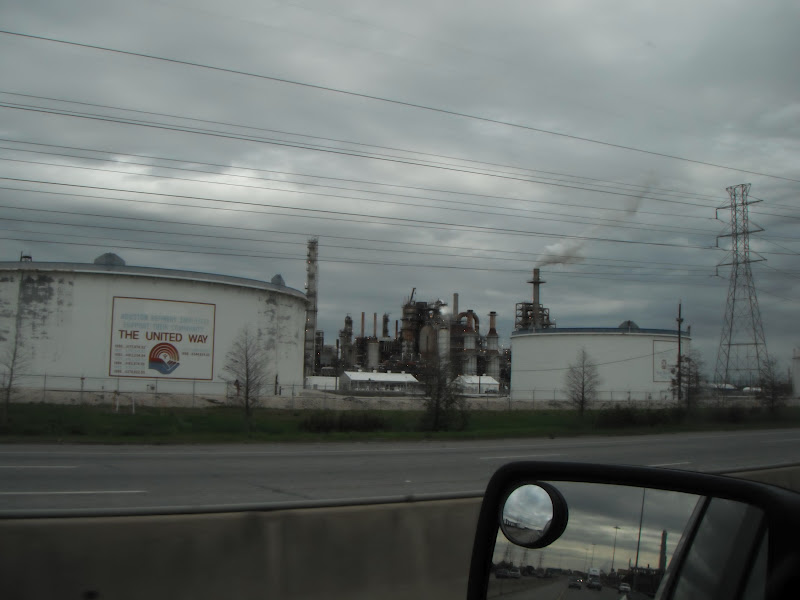
My home is in an area where we are literally surrounded by chemical plants. On the days when there is either an explosion or an accident, we have protocol for residents, businesses and schools to "Shelter in Place." We also have a AM radio station in place specifically for people to tune in and listen to the latest about a potential problem which will also give instructions on how to handle the event and will provide updated news bulletins.

Normally, a "Shelter in Place" includes:

1. Closing all doors and windows
2. Make sure all pets are indoors
3. Turning off HVAC systems so that no outside air is pulled inside
4. Stay tuned to news or to the designated radio station

However, we have a list of preparations, just in case there are air contaminants that would need to be addressed further. Usually, it's good to hunker down in a bathroom and have these items:

1. Duct tape and plastic sheeting to seal off door seals, window seals and a/c register vents
2. Extra drinking water and food on hand to last at least three days
3. Radio with batteries

There have been times when we have been forced to be in complete lockdown-shelter-in-place mode due to nasty chemical spills, but particularly because the wind was blowing our direction. That's a key factor for living in this area...to understand how wind direction might impact your available seconds to get yourself into the immediate confines of a better protected zone.


Of course, we live so freakin close to the chemical plants, that Sheltering in Place can sometimes be impossible. Plants are clearly visible from all sides of our house. But, Houston is the hub of the oil industry, so this is what we've lived with, for most of my life. Those stinking smells that hover in the air, well, my sister and I were just talking the other day about how we were raised to believe that those are "the smell of money."

And, it's true.

However, chemicals are dangerous substances and all of this prepping talk nationwide is sometimes a bit humorous to me because this is how we've lived our entire lives...PREPPED FOR DISASTER.

Actually, we live very close to Texas City. The largest and deadliest industrialized accident throughout American history happened in Texas City, on April 16th in 1947, at the loading docks. The horrific accident killed near 600 people and injured over 5,000 more. Just so you know, we have loading docks for chemical substances just down the road from us...this entire area is heavily industrialized.

Surrounded by fascinating incidents, this tragedy began with a fire aboard the Grandcamp which was carrying small arms ammunition, machinery, ammonium nitrate and bales of twine on the deck. To complicate matters, the docks had other ships in harbor, such as the SS High Flyer, which was about 600 feet away from the SS Grandcamp. Aboard the SS High Flyer was also more ammonium nitrate that was supposed to be on its way to farmers in Europe, as fertilizer. And the SS High Flyer was also carrying sulfur. Warehouses at the dock also housed these substances.

As for this ammonium nitrate that was used as fertilizer and partly in high explosives, it was packaged in paper sacks. A big hint that trouble was looming on this day had been when the longshoremen noted that the bags were warm to the touch, BEFORE loading them onto the ship.

Around 8am, smoke was seen coming from the cargo hold of the Grandcamp as it still remained moored at the dock in Texas City. Workers tried for an hour to put out bits of fire, but each time the fire returned. In attempt to save the cargo, the captain had his men steam the cargo hold, which is a firefighting method specifically designed to save cargo from being destroyed by dousing waters. The growing fire is now enough to attract people who are passing by the docks and a crowd is building. Standing a good distance from the ships, the spectators believed they were at a safe distance to have a front row seat to the hurried activities of those trying to put out the growing fire. It was noted that the cargo hold must have been so hot that the waters around the docked ship were boiling from the heat and water that splashed onto the hull of the ship turned to steam.

The heat of the fire was creating more devastation that would soon be of historical note because the ship itself began to heave and ho as the cargo hold and the deck bulged from the pressure of the steam increasing inside until the ammonium nitrate reacted as it is designed to do...it exploded, which cause the entire vessel to become a bomb. It blew up.

The blast created a 15 foot wave, leveled nearly 1,000 buildings on land, resulted in the ignition of refineries and chemical tanks on the waterfront, the falling bales of flaming twine created more destruction and the most amazing event occurred in the midst of the disaster...the Grandcamp's anchor flew across the city during the blast.

File:Txctyabandoned.jpg

Airplanes that had been circling overhead, watching events unfurl, were finding themselves caught in the blast with an impact so severe as the shear off the wings.

Many spectators were reduced to ash while others mercifully escaped the middle of death without harm.

File:Txctysurveying.jpg

Fifteen hours after the Grandcamp blew up, the SS High Flyer was the next to succumb to fire mixed with hazardous materials and its explosion destroyed the SS Wilson B. Keene that was docked nearby. Like the Grandcamp with the two-ton anchor flying 1.62 miles across the city to create a huge landing crater, the SS High Flyer's propellers were blown off and found about a mile inland. Both the anchor from the Grandcamp and the propellers from the SS High Sky are part of a memorial park in Texas City. A site we see very often is the other anchor from the Grandcamp, the main five-ton anchor that had hurled 1/2 miles inland to the entrance to the Texas City Dike is now part of their entrance.

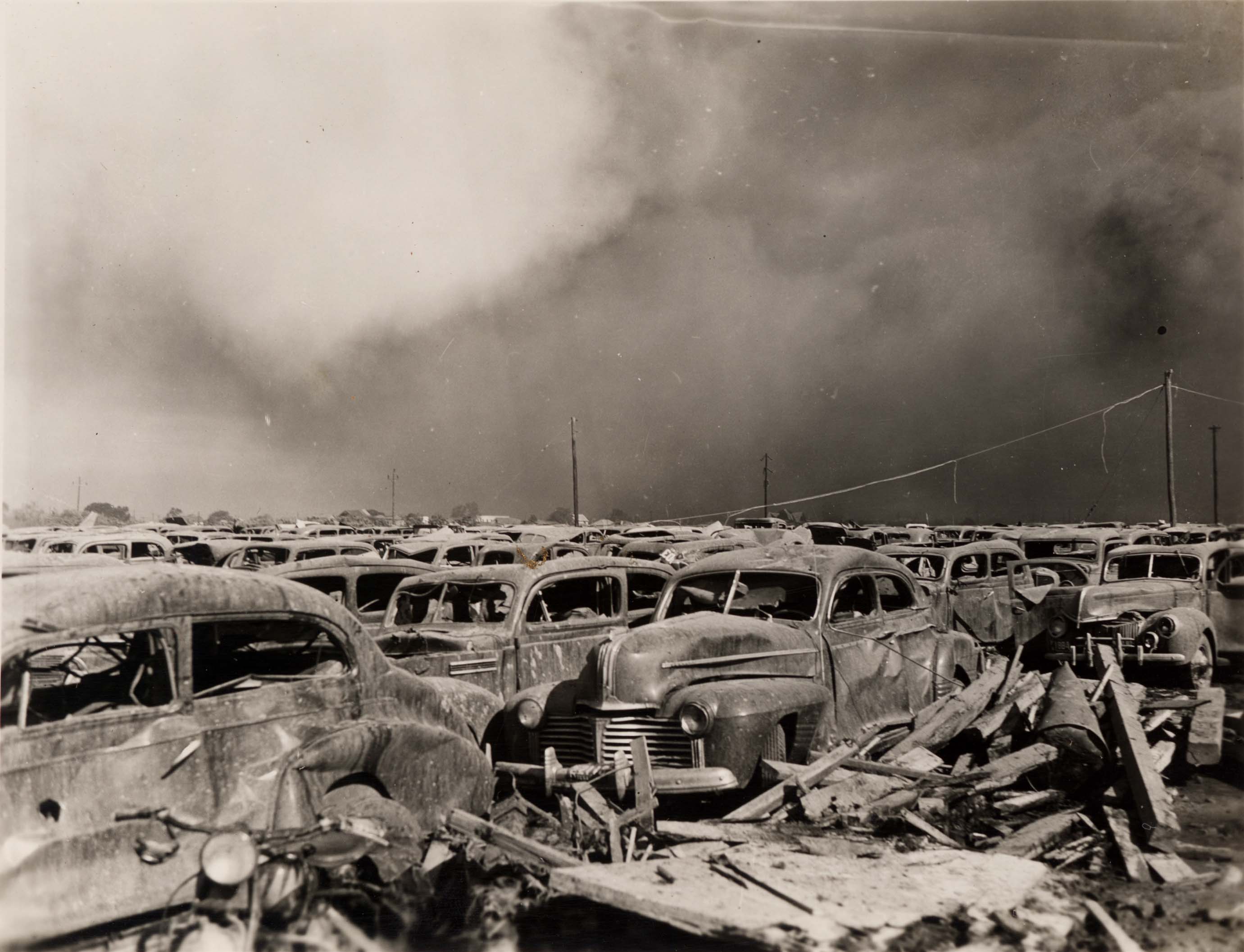
At the end of the horror filled event, there were more than 500 homes destroyed, 2,000 homeless, and if your home was destroyed, it was likely that your car was also in trouble...over 1,100 vehicles were damaged, 362 freight cars destroyed and the city was in chaos as an oily mist blanketed every surface of the city.

File:Txcitydisasterparkinglot.jpg

Texas City had 28 firefighters at the time, only one survived because he was the coordinator. Other firefighters from other departments died. Assistance from other firefighting departments came from as far away as Los Angeles.

File:Txctyfiretruck.jpg

On this day, we have "Shelter in Place" mostly because of this Texas City disaster. After this tragedy, a system of response to emergency was put into place. Industry changed our lives and being prepared for disasters, small or large, is our goal.

Living in an area full of plants that are producing hazardous chemicals and toxic products will force your awareness to be heightened.

As for explosions, around 1989 there was an explosion directly next door to the plant where my father was a supervisor and where my husband's brother worked together. The explosion sent my dad to his knees, blew out windows to their plant and created widespread destruction, but the Shell plant next door that had exploded caused the death of about 15 people. Many of them known to our family and to our community.

Throughout the history of our industrialized area, there have been many explosions and dangerous chemical releases...knowing how to quickly react in such a situation might save your life and the life of those around you. Having a "Shelter in Place" protocol  might be a good idea, no matter where you live. You never know when you might need to use it.

Prepping? I know a little something about it, but not Doomsday level. Out here, it's called..."Surviving the immediate disaster" kind of prepping. That's the real circumstances of what we live with...not preparing for zombies or for an atomic bomb, just a regular old explosion or chemicals floating our way that will sear our lungs.

Yes, I prep.


Tuesday, February 28, 2012

# 214 - To Flee or Not to Flee...Prepper Topic

Living in coastal area all of my life has given me ample experience toward "prepping" for the worse. Part of prepping is also a huge part of being a city gal who has lived in areas that have required diligent attention to our environment and to our industrial surroundings. Today's writing adventure has found me compelled to discuss the intricacies involved with deciding whether or not to flee your home.

This is a lengthy blog topic, so I warn you. If you need a good "potty-letter" to read, then, by all means, print and enjoy at your leisure. I'm sure my fellow blog buddies understand the need to purge these thoughts from my mental recesses and to get the awesome feedback that usually has me doing the head-nod in appreciation of the additional information and interesting commentary.

As for my topic, it should be noted that I've NOT been taught to prep for the end of the world because we already spend valuable time, energy and resources prepping for tornadoes and hurricanes, which can devastate a large area with minimal warning. If only we had the LUXURY to prepare for the end of the world...HA. We just want to survive this season's hurricane season!

First of all...for those of you who haven't endured widespread devastation...DON'T expect your government resources to come to your rescue because, FRANKLY, that is a lazy attitude and it is one that isn't practical. The local government cannot help you during an emergency when it can't even help itself. I cannot stress this enough to people who don't understand the value of being prepared for an emergency, especially for a natural disaster.

I speak of this with first-hand experience. Along with other people in our area, we're accustomed to being prepped for a disaster. Like I said, we prep mostly for a natural disaster or a chemical release. We've not really thought too much about end-of-the-world-doomsday plans because our area has definite concerns with day-by-day potential coastal disasters and industrialized dangers that require constant, heightened attention. Heck, we've even got alarms in place through our city to warn us about chemical releases so we can "Shelter in Place."

More of that on a later blog.

As for landscape-changing weather, the first hurricane I actually lived through was Hurricane Alicia. I was about 14 years old and my family did not want to flee. Even though our house was within a short distance from the Houston Ship Channel and a tidal surge was a danger, my dad decided that our family of five would ride out the hurricane at home.

We made it through multiple small tornadoes hitting our area and these tornadoes twisted the trees along our frontyard to look as if a giant hand took hold of huge branches and twirled them until they appeared other-worldly. Huge oak trees were uprooted and flung great distances; one landed on a neighbor's car, the whole tree, roots and all. Some massive branches were broken and settled in the road. In general, it looked as if the area suffered some sort of botanical-bomb blast.

This is when a good chain-saw is great to have on hand.

During the storm, especially during tornadoes, the doors and windows would literally start to buckle, as if a huge monster were trying to alternate between giving huge burst of blowing and then huge suction power action to reverse the terror. It is indescribable. With a hurricane, these kinds of things go on for hours and hours. A hurricane is not a blip on the radar screen, it is intensely scary for hours.

We stayed in an interior room, away from windows and doors. But, during that moment I had peeked at the front door and saw it bulging inward with beams of light suddenly showing through the creases surrounding the door; at that moment, I found myself truly scared. I don't know how that solid wood door held its ground, but it did. Dead-bolts locks don't really help all that much in that kind of situation.

So, when it comes to all of this excitement over "prepping," I believe the first area of concern should be with developing personal criteria that will be applied to whether or not the family decides to flee, if the option is available.

To flee or not to flee? THAT is the question.

Every other part of being prepared depends on whether or not you will need to flee. You can prep, prep, prep all day long, but if your basement is full of 20 years worth of food that floods or is blown away, then you aren't really prepared much at all.

In natural disaster, such as a hurricane, you really do NOT have much time to decide upon whether or not to flee because...as the storm approaches, there is such a wide zone for the storm to hit land that you can't have the entire coastal area fleeing for their life.

Premature fleeing can be a recipe for additional troubles, especially for a hurricane.

Prepping can mean that you must take steps to secure your home before fleeing. This means you must be ready beforehand. Prepping is all about being prepared BEFORE the emergency arises.

For this particular topic with my illustration of hurricanes, I can say wholeheartedly, as a resident in a coastal area, you must get to that hardware store on a relaxing day when the weather reports are delightful. Go get rolls of heavy-duty plastic sheeting, plywood, a staple gun with boxes of staples is always very handy to have for QUICK preparations, buckets, solar lights, tarps, and duct tape. My list is longer, but this is a good start.

In our area, we have many neighbors, such as ourselves, who take the time to pre-cut plywood to perfectly fit each window. Marking each board clearly so they can be put up quickly on the proper windows and/or doors is key. Pre-drilled screw holes are necessary and help you get the job done nicely. You can also write things in spray-paint on the plywood, as do our neighbors, such as, "BEWARE: This house is protected by armed residents."

Sadly, in coastal areas, this is necessary because there are opportunistic vultures out there who are ready to cash in on your disaster. Their burglaries aren't for self-preservation. The plywood covering all access points to a house greatly reduces the chance that it will be intruded upon during a short time of fleeing the residence, especially if everyone around you is fleeing in great numbers. You can bet that the criminals who pounce on foul-weather disasters will choose the temporarily vacated house next door with the windows not protected than they will your house that is boarded up tight. The thing about criminals is...they are usually lazy...or they wouldn't be criminals. They want an easy, fast buck without having to "work" for it like the rest of us. They don't want to work too hard to gain access into your house, so board it up.

If you must flee, then clear the yard and the house of any loose items. I can tell you that a street full of neighbors will not be happy with the fellow down the block who was so stupid as to leave their aluminum chairs on the back patio, unsecured and free to fly through your living room window along with the toys in their backyard that had transformed into flying bullets in the middle of the hurricane. In a coastal area, you EXPECT your neighbors to be prepared for the hurricane and to not let their belongings become hurtling damage to your property. Those are what we refer to as, "Stupid Mistakes."

To think that you could head for the hills at the first sign of every hurricane is simply impractical and not the way of people who live on or near the coast. People who live on coastlines have jobs and a life, just like everyone else. I once heard someone say, "People shouldn't live near the ocean." Well, someone has to run that snorkeling gear shop on the beach for the tourists and someone has to cook that delicious seafood in a place with a great ocean view. The harsh truth is...disasters can happen anywhere, they will simply have a different title behind the devastation.

One of the evacuation-zone maps. During Hurricane Ike, we
were located in a mandatory evacuation zones. We hunkered down and stayed. 
We Southerners understand that people who live in zones prone to snow can't simply flee at every prediction of a blizzard. Those potentially snow-bound people must prep their homes and their lives for this event. There are always dilemmas in any area you consider, even a place prone to earthquakes can have a house that is made to withstand the brutality of their worst nightmare, and the residents can at least be ready with their own emergency supplies that are similar to those needed for any kind of catastrophe.

As for fleeing a coastal region, most of us must wait to flee until it is fairly certain that the storm is approaching YOUR part of the coast. Until that point, yes, you can get ready. And yes, there are a few people who get the heck out of dodge the moment they see a blip on the radar; their jobs may not depend on their attendance, but not everyone has such freedom. Employers in coastal areas usually do NOT let you have "time-off" for a hurricane, unless it is down to the wire and it is mandated to evacuate. Otherwise, every Tom, Dick and Harry would be using a potential hurricane in the Gulf of Mexico as an excuse to "flee." You get the picture.

As the storm approaches and weather reporters are figuring out that it's POSSIBLE that the storm will hit our area...You begin to get the family packed for a trip that will last a few days. Depending on the strength of the storm, you watch the weather reports near constantly and try to figure out if this will be a Category ??? when it hits land. If you live in an area prone to easy flooding and have found your house to be a swamp a few times previously, it's probably safe to wager that fleeing is best. But, you'll still need to prep the house for your decision to flee. Board it up.

With the little warning available after a hurricane's "accurate" land-fall prediction, you become physically exhausted during last minute prepping. Some things MUST be last minute...you can't live life with your house boarded up as if you are living in a perpetual state of hurricane weather. Let's not be radical, please. Once you get back home, promptly remove the boards...don't leave them up to pay homage to graffiti inspired parts of town...take them down and try to live normal while in between hurricanes. Try.


Most people turn off the main water supply to the house and at each inside line to prevent a tidal surge or incidental flood waters from backing up into the pipes to spill over into your house. Some also cut off the gas lines.

We don't usually flee a hurricane, but for any black-out possibility that you have a bit of fair-warning about can give you time to put sealed bags of ice in the freezer to prolong internal cold temperatures during an outage and put ice in large leak-proof ziplock bags throughout the refrigerator. If the power is only off for a short-time, especially in warmer weather, you'll be better prepared to protect your food. If we know a booger of a storm is coming, we usually get to the store PRONTO and load up some ice-chests with ice so we can start bagging and and prepare to insert them into the freezer and fridge for the outage that is likely. Another tip is to empty the automatice ice bin, putting the ice into the ziplocks or bowls for the freezer to hold and turn off the auto-ice-maker --- this way the dropping temperature won't cause leaking and it will prevent the ice bin from turning into one huge block of ice once the outage is over.

Another area of concern is personal items. You won't have time for much, but preppers in coastal areas or other places prone to flooding, often find that keeping pictures and important documents are best stored OFF the ground and in a hardy plastic container that are easy to grab and remove. The containers will provide additional protection from water and moisture.

Another item besides having stocked up food and water is to have gasoline stored. We have plenty of gasoline during emergencies, especially to run the generator. And don't forget medications. I recommend that everyone do their best to stock up on life-giving medications and to keep a good supply of any other meds needed. Keeping these in containers that are water-proof might be necessary as well. Good old zip-lock bags handled with great care to prevent punctures can indeed be a precious commodity.

As for water, we coastal people are taught to fill every container in the house with water...all pots and pans, the bathtubs, buckets, etc., everything. If you have little children, be careful, they can fall head-first into a bucket or toilet and drown, so don't forget safety during your storm prepping. As for storing water, if there's an approaching hurricane, we even use "dirty" containers not suitable for holding drinking water; we still fill them with water and put them near the toilet to enable us to flush the toilets after water services are cut or made unavailable because of the storm. Pouring water into a soiled toilet bowl sure is a luxury when everyone around you doesn't have enough water to make toilet flushing a possibility. Having drinking water in commercialized jugs is nice, but you can never play it too safe with having an abundance of water during a disaster.

If you decide to stay hunkered down during Mother Nature's random decision to show off her powers, you better be ready to defend yourself because there is a time-frame, especially during the eye of the storm when the weather suddenly gets crazy, then calm and then crazy again. During this time, NO police or emergency call-outs will be available. Who wants to be on patrol as power lines are falling all over the place and winds are so strong as to pick up the patrol car and re-direct it elsewhere.

I'll tell you what's truly brilliant about city living...the reporters on television who constantly make it known to all in earshot, "Be warned, those of you who do not evacuate, there will be no city services --- that includes no police services --- during the height of the storm."

We shake our head in disbelief while knowing disclosure is important, you also know the criminals are rubbing their hands together in delight at their free-for-all announced time-frame that they mistakenly believe will enable them to more easily accomplish dirty deeds. In these situations, you are truly on your own for an extended period of time. Unfortunately, this is when the scum of the earth decides the risk is worth it for burglaries. If you are like our family and are prone to "hunker down," then be prepared to EFFECTIVELY battle with an intruder. Not only will you not be able to get an emergency response during this window of time, it is most likely that all phones will be down and that includes cell phone usage. In my family, all of us are assigned weapons and we know how to use them.

Not only can a country boy survive, us city people know how to do a thing or two as well. I don't frown upon my city smarts. I understand the workings of the criminal element that is alive and well down the street, much more than someone who doesn't have to worry about such things. City living can truly make you an individual who lives with a different level of awareness that's not necessarily required in the country, at least not as much. Live in a metropolitan area long enough and you will see just about everything. And that's not necessarily a good thing. There's plenty I could have lived without seeing, but being a city girl has taught me a lot about humanity, the good and the bad. Let's just say...in a disaster of any kind, I would NOT want to be anywhere near city limits. The city is too full of "Survivor" type of personalities who play WAY too many video games. Not a good combination.

I guess the bottom line is that I learned at a young age that fleeing is not always the best option. For some people, it is the only option. The ugly part about fleeing is that it can also put you in life-threatening situations. I've been in one of these situations after a hurricane had been predicted to hit the Houston area with ferocity. This was Hurricane Rita. Everyone panicked because Hurricane Katrina had just hit Louisiana only about three months prior. The terrifying destruction was fresh on everyone's mind. So, my daughters and I loaded up the truck and the RV, then we drove out of town on our own because Deputy Dave is a First-Responder and leaving town means end of job. So, us girls got on the road the day before the storm was to hit. And...we were on the road in dead stand-still traffic for thirteen hours.

Houston during hurricane evacuation and the "brilliant:
plan of putting "CONTRALANES" into effect...making each side
of the freeway go in one direction...OUT of town. Disasterous.
People...this is not good. I will never do it again. However, I was prepared. Unlike thousands of people, I didn't run out of gas while on the road. We never turned on the engine, unless we were moving. Other people foolishly ran their engines while being SO CONFIDENT that the traffic would somehow magically start moving again. Wrong! We had plenty of gas, even while towing a 30-foot RV because we sacrificed comfort to prepare for the worse. The worse happened to untold people who were stranded on the side of the road, with no shelter other than their car during the hurricane.

There is no doubt that residents of an area suspected to be possibly hit by Mother Nature will begin to nervously flee the area of danger, but the traffic in a greater metropolitan area quickly becomes overwhelming, congested, and full of mechanical difficulties that will impede the rest of the fleeing population

If you think a traffic jam due to a broken-down car is horrendous on a REGULAR working day; just imagine a traffic jam as nearly the entire population of the area is trying to escape Mother Nature. Then, you still have ridiculous traffic accidents that somehow occur at 10 miles per hour on the bumper to bumper freeway and these are even more disastrous because it's nearly impossible for emergency vehicles to get through to assist. Additionally, there are people who are not well and become very ill while trying to flee, some have heart-attacks...there is no way to get to a hospital or to get EMS help as you are jam-packed together like sardines on the road.

Don't let anyone lie to you. We have lived to see this up-close and personal...you are taking a huge personal risk if you decide to flee with the rest of the population. Our motto is: Get out early or stay behind ready to face the music.

Prepping for fleeing requires that you be prepared for problems on the road with plenty of water, food, and don't forget about "personal accommodations" since you won't be able to pull off the road or stop at the fast food restaurant for the potty break, and you'll need to be able to defend yourself appropriately from an approaching angry driver who has vacated his vehicle in a delirious mental state --- this means defending yourself without killing the innocent occupants of the vehicle next to you by accident. Understand bullet trajectory.

In our current neighborhood, a few blocks over, during Hurricane Ike, my husband's friend decided to "hunker down" and ride out the storm as well. After the storm, we were all left with devastation. We had no running water and no electricity. My husband's friend set up an area for him to sit in his driveway. Our houses were soaked, we had temperatures in the 90's and it was miserable. Who wants to sit in a stinking sauna? One late night, as he sat in his driveway, with his shotgun across his lap, he saw something across the street in the corner of his eye. He took his high-powered flashlight and shone it to reveal two men using their foot to bash in a window in an attempt to break into the house. He quickly propped the light to shine on the area of the intruders, then he stepped away from the light source, just in case THEY had weapons and he pumped his shotgun while yelling in his Southern deep voice, "YOU READY TO DIE!"

No, that wasn't really a question, but a statement.

Now, this fellow and buddy of my husband is from backwoods Arkansas. There is no doubt that he was ready to follow up with some action behind his "statement." The guys fled, but Deputy Dave's friend would have preferred to drop the intruding rats on the spot. But, as they ran away and out of the light source into the pitch blackness of night, they escaped. Without ANY electricity anywhere to aid his search, our friend stood his ground to protect his own house AND his neighbor's homes. That's Southern Hospitality at its finest folks.

At least he scared away the intruders before they were able to get inside the house and create more damage than what the storm had already inflicted upon the residents.

And since the "prepper" mindset and way of living is not really anything new, yet it is finally being openly discussed, I am enjoying all the sudden main-stream interest in preparing for emergencies. It's weird to watch the people on television display their stock of food that will last twenty years. Some of these people have never been in a real-live situation that has required them to consider leaving their home or to actually be in the midst of a disaster of huge proportions. But, I'm learning more by watching. However, I think I'll stick with my life-long preparations that don't go too far into the "I'll survive the death of the world" kind of thinking, after all, do you really want to live in such a world? Hmmmmm.

Deputy Dave "prepping" for hurricane winds.
I have so many lessons learned from childhood and adulthood about preparing for emergencies. Since this is a topic that is apparently fascinating to more people than most of us realized...rather than just us chemical-industrial area residents with the bay close by...then I will be putting our hard learned lessons out there to share.

There are definitely more areas of prepping that we've been taught in our household for various reasons; I'll go into those on my next "prepper" blog entry. For now, there's too much information to cover in one sitting, even though I do type well over 90 words per minute, it's still tedious to share everything in this area.

And just so you know, if the end of the world comes tomorrow, I'd prefer to have a straight ticket to Heaven instead of having to spend the rest of my life in a bunker as Billy Bob hogs the off-tasting canned pork-n-beans.